


"The riskiest thing in the world is the widespread belief that there’s no risk.”
e.Howard Marks 1946 - present; co-founder and co-chairman of Oaktree Capital Management f
SITUATIONAL AWARENESS - RISK MANAGEMENT IN AN UNCERTAIN WORLD
In 2024, a young former OpenAI researcher named Leopold Aschenbrenner wrote a sprawling, 165-page essay that became required reading across Silicon Valley. He positioned himself as one of the few people who saw the future clearly and titled the piece "Situational Awareness: The Decade Ahead." In it, he explored the implications of emerging artificial general intelligence (AGI), particularly the security risks he believed could accompany its development. He quickly turned that interest into a lucrative investment strategy, launching Situational Awareness LP, a hedge fund centered on a high-conviction bet on the AI infrastructure boom.
Driven by concentrated bets on one of Wall Street’s most popular trades - owning companies expected to supply the chips, data centers, power, and other infrastructure behind the AI boom, while betting against software firms viewed as vulnerable to the technology’s disruption - the fund grew at a remarkable pace. It eventually surpassed $45 billion in assets under management (AUM), an astonishing amount given Aschenbrenner’s age - he was just 24 - and his limited investing experience. That growth followed a staggering 439% net return in the first half of 2026 alone and more than 1,000% since inception, according to reporting by The Wall Street Journal.
In July, the release of cheap, powerful AI systems developed in China triggered a broad selloff in global semiconductor stocks. With a heavily concentrated portfolio that was long on AI and highly leveraged, the brutal tech selloff left the 20-something’s fund particularly vulnerable. Situational used up to four times leverage, meaning it borrowed as much as $3 for every $1 of its own capital. That magnified every move and helps explain why its swings were larger than those of other funds exposed to similar volatility. If the firm's rise was breathtaking, its fall was even more so. Situational's assets collapsed from $45 billion to around $10 billion in a matter of days, a wipeout of more than three-quarters, triggering a series of margin calls and putting enormous pressure on the firm to either raise fresh capital from investors or offload its entire book. Ultimately, billionaire Ken Griffin’s firm, Citadel, stepped in to bail out Aschenbrenner, purchasing the bulk of the fund’s publicly traded stock portfolio at a steep discount of more than 10% below market value. The hedge that was supposed to protect Situational in a downturn failed precisely when it was needed most: its AI-related holdings fell, while the software stocks it had shorted rose.
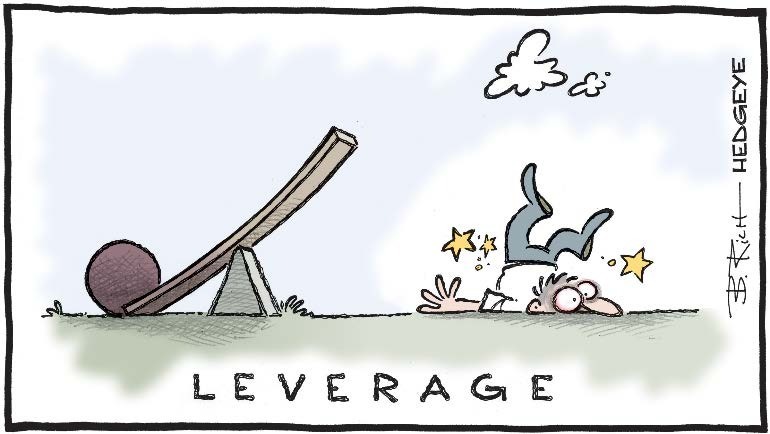
Even a whiz kid once called the ‘Nostradamus of AI’ - who staked his reputation on seeing further ahead than everyone else - had, in the end, missed the risk sitting closest to home: what concentration and leverage can do to a portfolio when the market turns, regardless of how right the underlying thesis may be. The sudden vaporization of the young AI investor’s high-flying portfolio is a stark reminder of how a lack of risk management can destroy wealth remarkably quickly.
One way to think about the danger of taking too much risk is through the concept of ‘going full Kelly.’ On Wall Street, it refers to betting the maximum amount that a mathematical formula suggests is appropriate to maximize long-term returns, without leaving much room for error. In practice, it can lead to extraordinarily concentrated positions and significant leverage. In investing, the lesson is simple: ‘never go full Kelly!’ But that is precisely how Aschenbrenner appears to have operated his fund.
It’s a pattern markets have seen before. Financial history is full of funds that start with a sound idea, post extraordinary returns, and then collapse under a combination of overconfidence and too much borrowed money - Long-Term Capital Management, Archegos, Amaranth. Situational Awareness - implying an acute perception of the surrounding environment - just happened to lack the very foresight it promised.
We raise this not to pick on any one manager or fund, but because the ingredients behind its collapse - concentration, leverage, and hubris - can pose the same risks to individual investors at a time when the U.S. stock and bond markets are navigating a complex convergence of macroeconomic headwinds. As Situational Awareness discovered, these dangers rarely announce themselves until the damage is already done.
Past performance is not indicative of future results
In the paragraphs that follow, we'll look at some of those headwinds that are building and the danger they could pose to investors. We’ll then discuss steps investors can take to minimize unwelcome surprises - steps we automatically take on behalf of our clients as an integral part of our ongoing investment management process.
With markets trading near record highs, none of these headwinds are expected to materialize immediately, or even at all - but that is precisely what makes them worth watching. With that in mind, there are several risks we believe are worth watching closely:
OCTOBER 2026
SITUATIONAL AWARENESS - RISK MANAGEMENT IN AN UNCERTAIN WORLD.PDF